


Feb 5th 2026 by The UbeCube Team
How to Create a Flexible Hobby Space Anywhere in Your Home
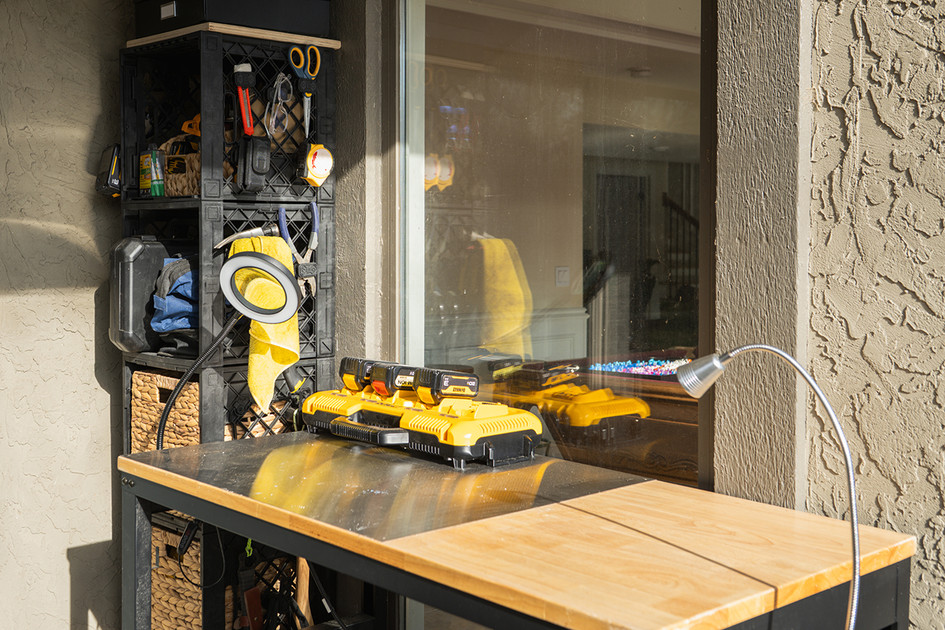
Not every hobby needs a dedicated room. Sometimes all it takes is the right corner, a narrow wall, or an underused stretch of space to create something that actually works.
Whether you’re into woodworking, electronics, crafting, photography, or hands-on DIY projects, a good hobby setup isn’t about size. It’s about access, organization, and the ability to adapt as your interests grow.
Turning Unused Space into a Functional Hobby Area
Many homes have awkward or underused areas: narrow wall sections, corners near doors, or transitional spaces between rooms. These spots are often ignored because traditional furniture doesn’t fit, or isn’t worth committing to.
Instead of building permanent furniture, modular storage allows you to define a space without committing to a fixed layout. Crates can be stacked vertically to minimize footprint, placed beside existing furniture, or arranged into compact towers that hold tools and supplies within reach.
This approach is ideal for hobbyists who want a dedicated area without taking over an entire room.
Keeping Tools Visible, Organized, and Ready
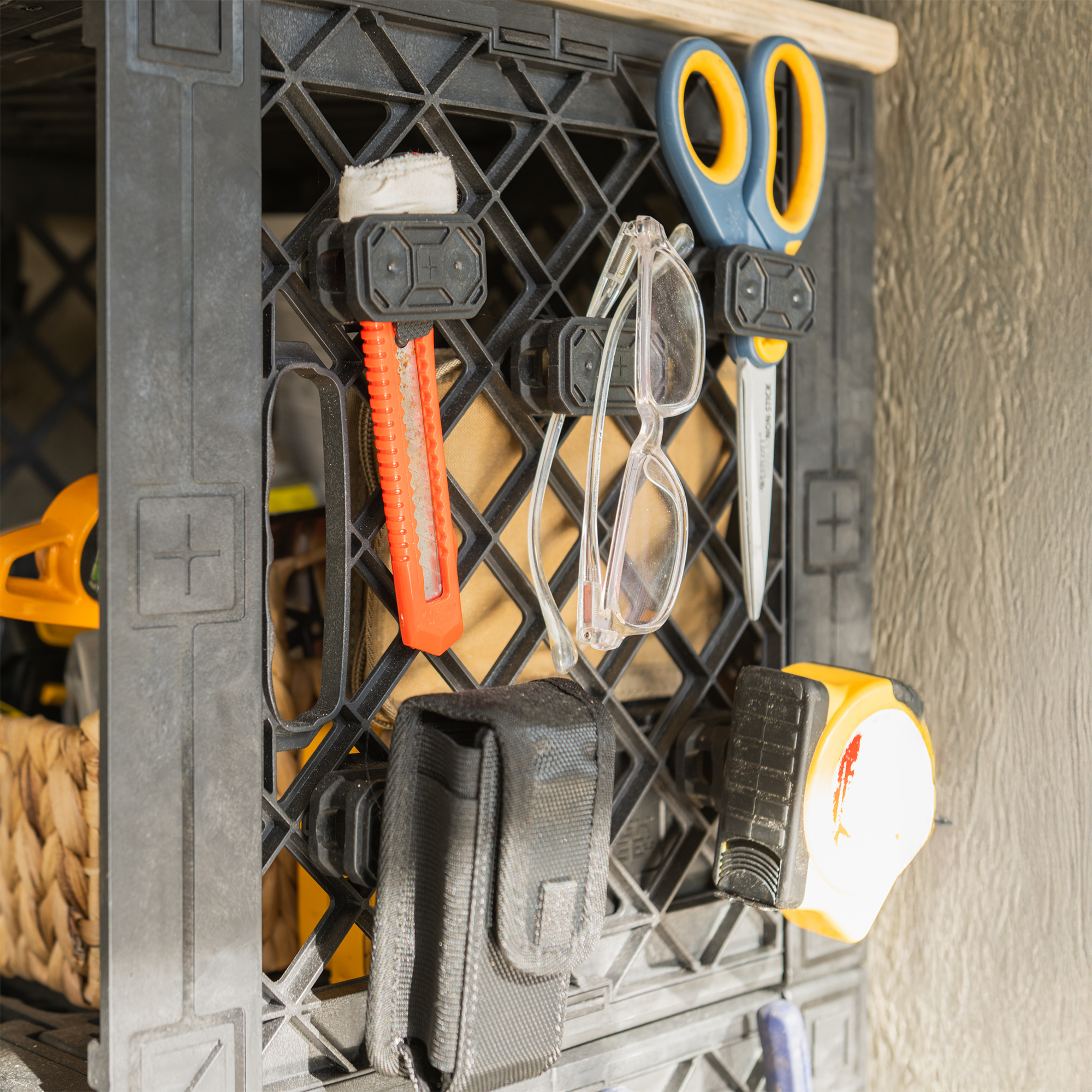
One of the biggest frustrations in any hobby space is losing time to clutter. When tools are buried in drawers or scattered across shelves, projects slow down fast.
This build uses crate-mounted accessories to keep frequently used tools exactly where they’re needed. Hooks, holders, and attachment points connect directly to the crate structure, allowing tools to live on the outside of the system instead of inside a box.
That means less digging, fewer duplicates, and a setup that naturally stays organized as you work.
Designing a Hobby Space That Grows With You
Hobbies change. Tools evolve. What starts as a small setup often expands into something more involved over time.
Instead of replacing furniture every time your needs shift, this system grows piece by piece. Additional crates can be stacked, connected, or reconfigured to add capacity without starting over.
Internal accessories like shelves and bins allow each crate to be customized, whether you’re storing small components, larger gear, or project materials. The same structure works today and adapts later.
Section 4: A Work Surface That Integrates With Storage
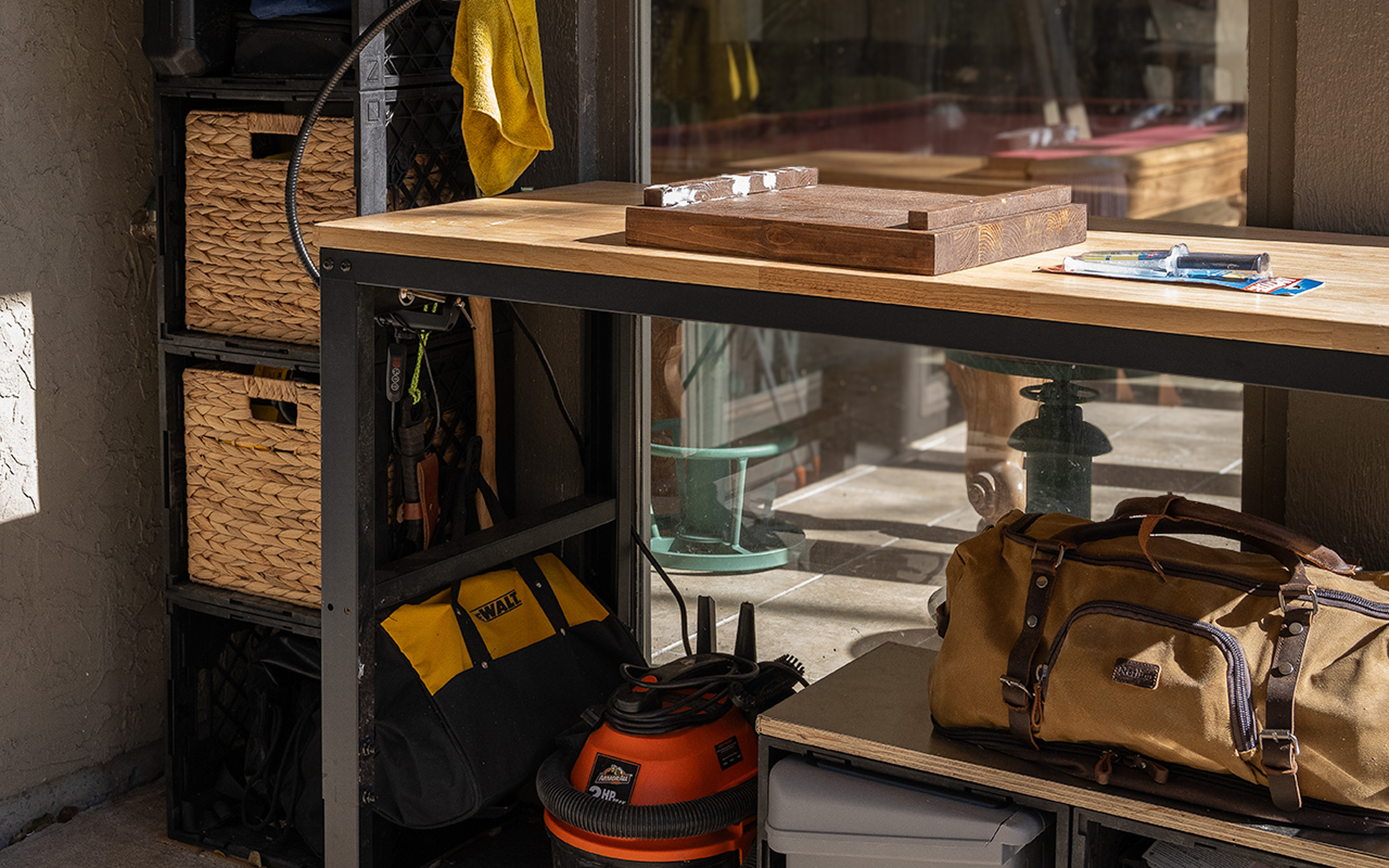
A hobby space isn’t complete without a reliable surface to work on. In this setup, the worktop sits naturally alongside the crate system, keeping tools, power supplies, and materials within arm’s reach.
Because the storage is vertical and modular, the work surface stays clear and usable, not crowded by shelves or bulky cabinets. Lighting and accessories can be added directly to the crates, keeping the workspace focused and efficient.
This kind of integration is especially useful in multipurpose rooms, where your hobby setup needs to coexist with everyday life.
Section 5: Small Spaces, Big Builds — and Everything In Between
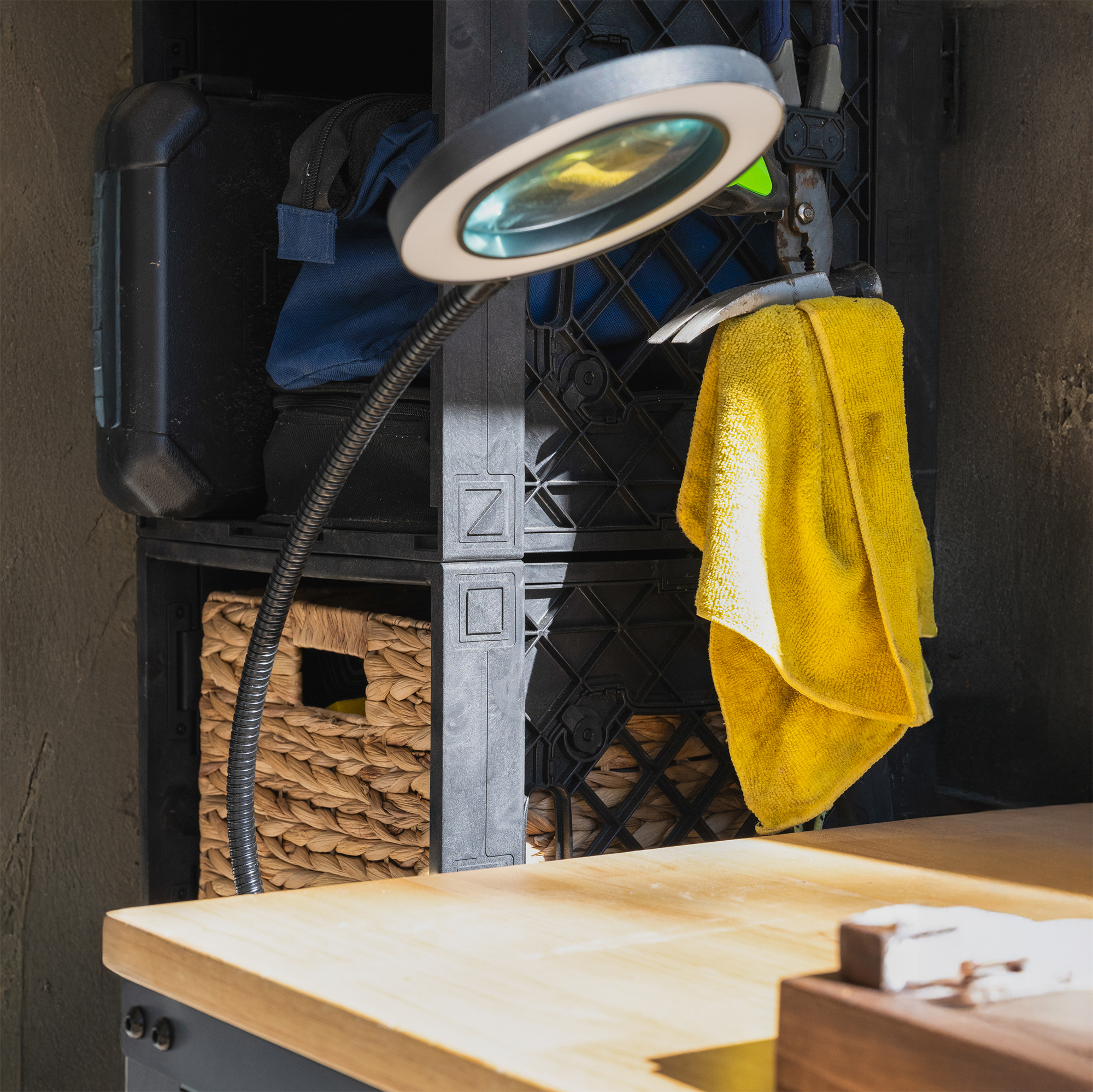
This approach works just as well in large garages as it does in tight indoor spaces. In a bigger room, crates can be expanded horizontally to form full walls or zones. In smaller areas, vertical stacking keeps the footprint minimal.
The key advantage is flexibility. You’re not committing to a single layout, use case, or room forever. You’re building a system that adjusts to your space, not the other way around.
Wrap-Up
A great hobby space doesn’t have to be permanent, massive, or expensive. It just needs to work, today and tomorrow.
By using modular crates, adaptable accessories, and vertical storage, you can transform almost any underused area into a productive, organized hobby station. And as your projects evolve, the system evolves with you.
That’s what makes this setup not just convenient, but sustainable long-term.
Frequently Asked Questions
What is the best way to create a flexible hobby space at home?
The UbeCube™ storage system makes it easy to create a flexible hobby space by using modular crates that can stack, connect, and reconfigure as your needs change. Start with a simple setup and expand over time.
How do I organize different hobby supplies in one space?
UbeCube™ crates can be divided using Grab Bins, CrateDivider™ kits, and shelves so each hobby has its own organized section. You can easily swap layouts depending on what you're working on.
Can I store and transport my hobby setup easily?
The UbeCube™ system is designed to be portable, allowing you to take your hobby setup anywhere. Simply grab your configured crate and go, whether you're moving rooms or heading out.
What types of hobbies work best with modular storage?
UbeCube™ crates work well for hobbies like LEGO® building, crafting, painting, electronics, fishing gear prep, and more. The system adapts to both small parts and larger tools.
Can I expand my setup over time?
The UbeCube™ system is fully modular, meaning you can start with one crate and continue stacking, connecting, and adding accessories as your hobby grows.